




Skin Lesions: Know Everything- Cause, Types, And Symptoms
Sometimes wrong treatments without proper knowledge can cause increasing the risk of the problems. It can lead to many more major issues, and thus you might spend more money than initially.
This article deals with all the facts relating to skin lesions.
Here we will deal with what it is, its types, symptoms, causes, treatments, and many more. So if you face any such problem, you can effectively deal with it by knowing its actual reason, how it has been caused, and what you need to do.
So, keep reading for further information about it.
Table of Contents
What Are Skin Lesions?
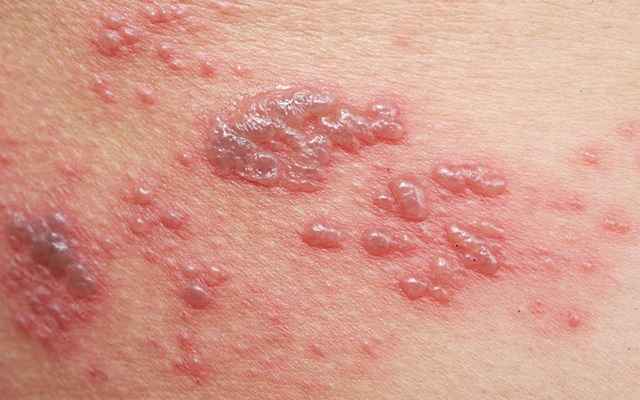
A skin lesion is characterised by any area of the skin having a different, abnormal growing appearance compared to the surrounding skin in terms of shape, texture, size and colour. They often can be identified on the skin as they cause patches, bumps, abnormal lumps, ulcers, and sore skin areas.
Skin lesions are quite common, and a major reason behind these is local damage to the skin caused due to factors like sunburns, contact dermatitis, etc.
In other cases, it can also indicate any underlying disorder, infection, diabetes, genetic disorder or autoimmune.
Even though they are harmless and benign in almost every case, there are still risks of some being malignant or premalignant. In simple terms, they have the potential to turn into skin cancer.
Types of Skin Lesions
Skin lesions are broadly categorised into two divisions: Primary and Secondary.
Primary Skin Lesions
They are often pre-present on healthy skin as a skin condition since birth, associated with a specific cause, or can even be acquired over a person’s lifetime. The most common primary skin lesions are moles, freckles, and blisters.
The primary skin lesion includes the following
Blisters
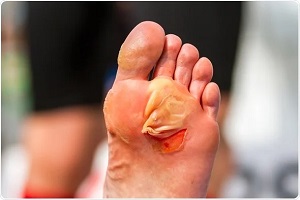
Blisters are skin conditions filled with watery fluid. Blisters smaller than 1 are called vesicles, while large blisters are called bullae. They are often the result of steam burns, viral infections, sunburns, insect bites, and friction caused by new shoes or even clothes.
Macules
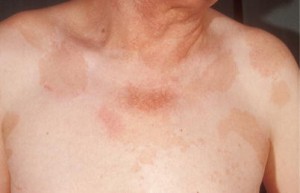
The brownish-reddish or small whitish spots on the skin are typically macules. Flat moles or freckles are examples of macules. They are often almost 1cm in diameter.
Pustules
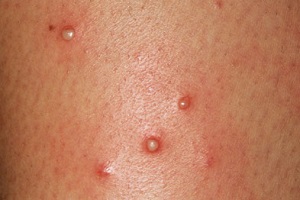
These are, in simple words, the typical acne, boils or impetigo that people often suffer from. These are small lesions which have pus filled in it.
Nodules
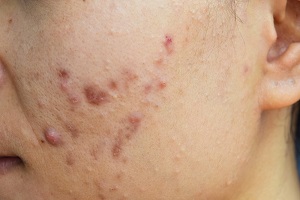
At times we notice growths occurring under this skin. They are nodules. Certain types of cysts are examples of nodules. They are often under 2cm, but the overlying skin can also be affected if they grow big enough.
Tumour
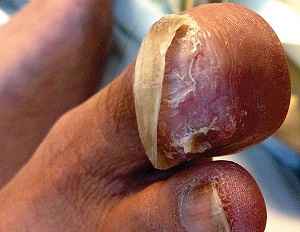
A tumour is a type of skin lesion larger than the size of 0.5 centimetres and is similar to nodules in looks. They are, at times, cancerous and, at times, Benign.
Rashes
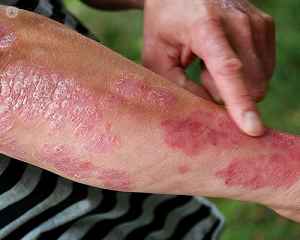
These types of lesions cover small and large areas of the skin depending on the allergic reaction caused. If a person touches poison ivy, a common allergic reaction can occur.
Cyst
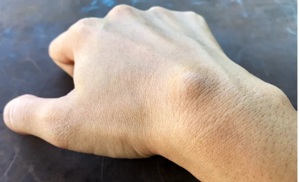
A cyst is a part of the skin which is notably known to be filled with semi-solid fluid or just fluid and has a clear border.
Bulla
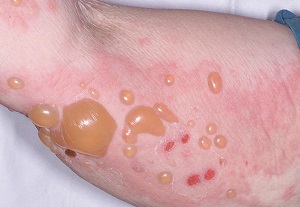
Bulla is filled with a watery substance or fluid of more than 0.5 centimetres. It is also a type of vesicle.
Papules
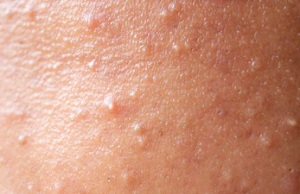
These develop in groups with other many other blemishes. They are a type of raised lesions. In most cases, Papules or nodule patches are called plaque. People with psoriasis most commonly have plaques.
Wheals
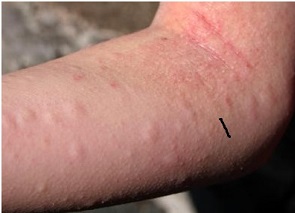
These are irregular-shaped, solid skin lesions that are caused due to allergic reactions to something and last for a short period. For example, you can see Hives.
Secondary Skin Lesions
They arise due to interference with the primary skin lesions. To be specific, any irritation or manipulation caused to the primary skin lesion can result in secondary skin lesions.
It can result from any traumatic manipulation, such as continuously scratching or rubbing a mole, a primary skin lesion, until the moment it starts to bleed.
Scars, crusts, ulcers, and sores can be an example of secondary skin lesions. Therefore, a crust resulting from any meddling with the primary skin lesion is an example of secondary skin lesion.
The secondary skin lesions include the following :
Scars
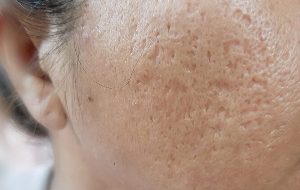
Some kinds of scars are not replaced by normal healthy skin after recovery. Such cuts and scraps instead turn into a raised thick scar. These scars are called keloids.
Ulcers
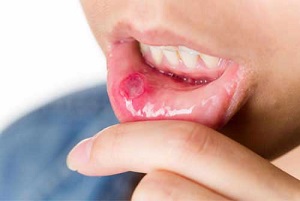
It is a wound that is deeper than the top layer of the skin. However, it damages the second skin layer. The most common cause of ulcers is physical trauma or bacterial infection. Ulcers often accompany poor circulation, are concave, and come in variable sizes.
Crusts
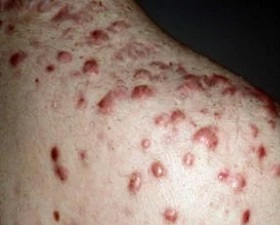
When you scratch or irritate the skin lesion, a layer of dried blood, pus, or maybe serum is created called a scab or a crust. It is formed by a dried fluid that can make a skin area rough and elevated.
Skin Atrophy
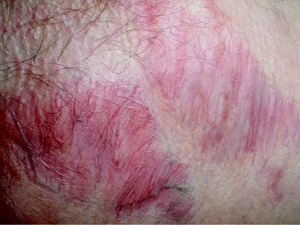
From the use of typical tropical steroids or poor rate of circulation, there are times when the skin becomes wrinkled and thin. That is when skin autopsy occurs in those areas.
Scales
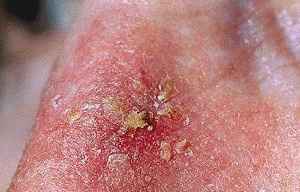
The patches of skin cells that accumulate and flake off the skin are scales caused by actinic keratosis.
Erosion
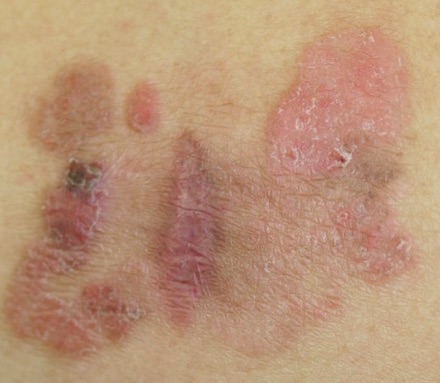
A sore area that occurs as a result of a partial or superficial breakdown of your skin is erosion.
Phyma
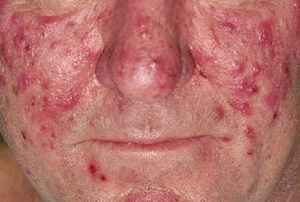
Phyma occurs due to the thickening of the skin. It is generally seen in advanced rosacea.
Fissure
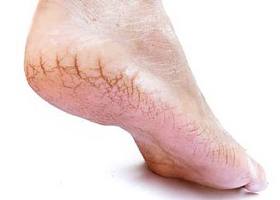
The linear breaks we see on the skin’s surface are Fissures. These are often noticed when one has too much dry skin. They are painful and can go deeper into the second layer of the skin.
Maceration
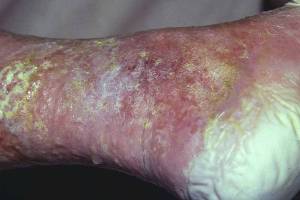
If you have a wound that is improperly cared for or if your skin is in contact with fluid or water, then maceration occurs. The skin area feels wet, lighter in colour, and wrinkly.
Umbilication
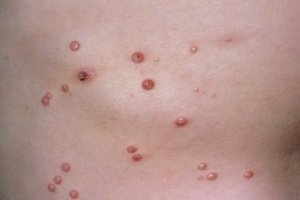
It is similar to a navel because umbilication causes a dip inside the skin.
How Do Skin Lesions Look?

Skin lesions do not have a particular look. They can be in different varieties of sizes, shapes and forms.
Moreover, it doesn’t end here. Skin lesions also might appear isolated as a single lesion or in groups. Also, they might be localised and concerned with a single skin area, or they can spread throughout the body in different parts.
Macules, the primary skin lesions, are usually flat and are about 1 centimetre in diameter.
On the other hand, patches are the same as macules but are larger in shape and range higher than 1 centimetre.
Papules are raised bumps that go up to 1 centimetre in diameter, whereas they are called plaques when they are larger than 1 centimetre. A plaque which at times appears and then again disappears is a Wheal.
The two types of pus-filled blisters, vesicles size up to 1 centimetre in diameter while bullae are larger than that. Pustules which include pimples and acne are the ones filled with pus. They are lesions with elevations of over 1 centimetre in diameter.
Lastly, scales consist of accumulated dead skin cells on the outer layer of the skin, which have become dry and flaky, and at times we peel them off. At the same time, crusts at the exudates come out in the form of sebum, blood or pus.
What Are The Skin Conditions That Cause Of Skin Lesions?
The are several possible causes behind skin lesions. Some common causes include acne, folliculitis, fragile skin, dry skin, contact dermatitis, injuries, extreme cold, sunburns, allergic or bacterial reactions, viral infection, diabetes and even skin cancer.
However, birthmarks, moles and freckles are types of skin lesions that are heredity and exist at the time of birth.
- Acne: Acne is a problem where there’s a combined problem of inflammation, clogged pores, acne bacteria and oil secretions and thus leading to lesions.
- Folliculitis: Just as the name suggests, they happen due to inflammation of the hair follicles and Staphylococcus aureus bacteria.
- Fragile skin: Due to bruises, your skin tends to become fragile and thus leading to skin lesions.
- Dry skin: Dry skin, better called Xerosis, is a condition that sometimes results in rashes and rough patches on the skin’s surface.
- Dermatitis: Itchiness, rashes, and scaly skin results from contact dermatitis and thus lead to skin lesions.
- Sunburn: This is one of the most important and major causes of skin lesions. Due to ultimate extreme exposure of the skin to ultraviolet rays, sunburns occur, leading to blisters and precancerous lesions if not adequately cared for.
- Wart: It is caused by direct skin contact from one person to another, which is also called Human Papillomavirus (HPV).
- Insect bites: Insect bites are another reason for inflammatory skin, lumps, and blisters, which may cause skin lesions.
- An injury suffered: Skin lesions are also the result of mechanical injuries, which cause inflammations and raised skin surfaces.
- Extreme cold: Excessive exposure to the sun but also extreme cold can cause damage to the top layer of the skin resulting in blisters, frostbites and many more.
- Diabetes: Diabetes, accompanied by symptoms like blisters, sores, wounds, skin tags, bumps, and scaly patches, are also responsible for causing skin lesions.
- Allergies: Itchy rashes are the result of allergic reactions, which are skin lesions.
- Viral and bacterial infections: Cellulitis and impetigo are bacterial infections on the skin surface which cause sores and blisters. Similarly, viral infections like measles and chicken pox can cause rashes and spots on the skin and, thus, either way, resulting in causing skin lesions.
What Are The Symptoms Of Skin Lesions?
The symptoms of skin lesions vary depending upon the type of skin lesions you have. The same basic symptoms that are common in all cases include
- Since skin lesion is characterised by abnormal growth on the skin surface, it is the primary and the easiest understandable symptom.
- Another common symptom noticed in every person who has skin lesions is itchiness.
- Swelling is also considered a symptom of skin lesions.
- Skin lesions are also characterised by irritation, painting and changes of colour to black, blue, brown or red in the affected area.
- Suppose you notice that the rate of the skin lesion is increasing and expanding. It is causing severe pain, bleeding, leaking of pus and not healing as you expected it to be, suffering from symptoms like joint pain, swelling, fever or anything that makes you concerned. In that case, it is suggested that you immediately contact your healthcare provider.
How Are Skin Lesions Diagnosed?
A physical examination by a doctor or dermatologist, a doctor dealing with skin issues, is conducted to diagnose if it is a skin lesion.
The physical diagnosis includes observing the skin lesion, and the patient might be asked to give fuller accounts of all the symptoms they have been noticing for a considerable period.
However, this is not the conclusion.
So to confirm the diagnosis, skin samples are taken, a biopsy is performed on the concerned area, or a swab from the concerned area is taken to the lab for further examination.
What Are TheFew Most Important Facts To Know About Skin Lesions?
Some facts about skin lesions are mentioned below :
- Any irregularity on the skin that is characterised by a difference from its surroundings, including texture, shape, colour and size, falls under skin lesions.
- The causes behind skin lesions can be either hereditary or inherited from your ancestors, like birthmarks and moles or can be the results of allergic reactions, extreme exposure to the sun, any medication or a systematic disease, including any autoimmune disease, infectious disease, cancer, etc.
- The first step of diagnosing any skin lesion begins with a physical examination by the dermatologist and checking the person’s medical history. However, it may require, at times, some tests to run over the person, such as a biopsy, blood test or imaging.
- What kind of treatment the person receives depends upon the lesion type or if the chances of malignancy are present.
- Not all brown spots that you see on your skin are moles. Benign lesions are not harmful and do not create problems; thus, some might not require treatment. At the same time, some skin lesions might require an appointment with the doctor.
- Surgical methods might be addressed to prevent the progress of any malignant or premalignant present in the body.
- Since one of the most common causes of skin lesions is the extreme exposure to the surrounding, it is suggested that you apply some sunscreen to protect yourself from the sun’s harmful rays whenever you go out.
Conclusion
Thus, if you are facing any unnatural skin condition, you should immediately contact your doctor to get the best advice and treat the necessary at its earliest.
Try to follow every step, without missing out on anything, that the doctor has suggested in every possible way to get the best results.
DON’TIGNORE IT!
FAQ’s
What do skin lesions consider to be indicating?
It indicates that your skin has been affected due to sunburn, contact dermatitis or any indication about any underlying disease inside your skin surface.
What makes you suspect there is a skin lesion?
Above in this article are listed the symptoms that are indications that there has been a skin lesion. You should immediately contact your dermatologist if you notice any such general indication.